Skin & Cellular Research
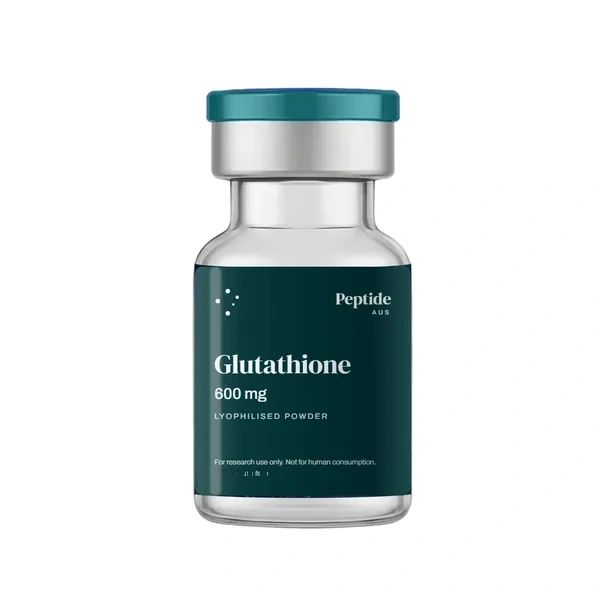
Glutathione (600mg)
Research Glutathione vial, dispatched from Australian stock. In Stock
$79.99AUD, GST inclusive · $0.13 per mg
CoA on request600mg per vialLyophilised powderSame business day dispatch*
Endogenous tripeptide antioxidant (γ-glutamyl-cysteinyl-glycine)
Built from glutamate, cysteine and glycine, glutathione is the cell's most plentiful internal antioxidant, present at millimolar levels in every cell. It mops up reactive oxygen species, regenerates vitamins C and E, and handles phase II detoxification in the liver. In its research-grade form it serves as a reference antioxidant and features in oxidative-stress assays.
How it works
Electrons from the cysteine thiol neutralise free radicals and peroxides, and in doing so glutathione becomes glutathione disulfide (GSSG); glutathione reductase then restores it using NADPH. How much sits in each state, the GSH:GSSG ratio, is a routine readout of a cell's redox balance.
What the research reports
Oral and intravenous glutathione have been trialled in oxidative-stress conditions, skin pigmentation and liver disease, and the outcomes have been mixed, in part because the oral form absorbs poorly. Laboratory studies lean on it as a positive control for antioxidant capacity and within melanogenesis assays.
Key research areas
- Redox biology — GSH:GSSG ratio used as a marker of oxidative stress
- Detoxification — Phase II conjugation inside hepatocytes
- Melanogenesis — Tyrosinase inhibition within pigment-cell assays
- Mitochondrial protection — Buffering ROS in cells under stress
Also known as: GSH, Reduced glutathione, L-glutathione, l-glutathione, reduced glutathione
Certificate of analysis. Every batch carries a certificate from an independent laboratory. Request the certificate for your batch with your order number and we send it.
Specifications
- Compound
- Glutathione
- CAS number
- 70-18-8
- Category
- Skin & Cellular Research
- Vial size
- 600mg
- Certificate of analysis
- Available on request
- Form
- Lyophilised powder
- Suggested reconstitution
- 6 mL bacteriostatic water
- Storage (lyophilised)
- −20 °C, protect from light and moisture
- Storage (reconstituted)
- 2–8 °C, use within 8–12 weeks
- SKU
- PEP-033-600MG
Reconstitution calculator for this vial
Full calculator →Glutathione dosage: what the published studies used
The table lists the amount, frequency and duration each Glutathione study reports, in the model it used. Most peptide research is animal or cell work, so the model column matters as much as the number. These figures describe the research. They are not a recommendation, and Peptide Aus does not give dosing advice for people.
| Study | Model | Amount used | How often | Duration |
|---|---|---|---|---|
| Cascinu S et al. (2002) | Human RCT, colorectal cancer on oxaliplatin (n=52) | 1,500 mg/m², intravenous infusion over 15 min | Before each oxaliplatin dose (bimonthly regimen) | Up to 12 cycles |
| Tanzilli G et al. (2019) | Human pilot RCT, STEMI before angioplasty (n=50) | 2,500 mg in 25 mL, intravenous infusion over 10 min | Before the procedure, then at 24, 48 and 72 hours | 72 hours |
| Richie JP et al. (2015) | Human RCT, healthy adults (n=54) | 250 or 1,000 mg, oral | Daily | 6 months |
| Søndergård SD et al. (2021) | Human RCT, obese males with and without type 2 diabetes (n=20) | 1,000 mg, oral | Daily | 3 weeks |
| Mawu FO et al. (2025) | Human RCT, acne vulgaris (n=40) | 500 mg, oral | Once daily | 4 weeks |
| Duperray J et al. (2022) | Human RCT, Asian women (n=124) | 250 mg GSH, oral, alone or with 500 mg L-cystine | Daily | 12 weeks |
Glutathione vial maths
| Vial | Bacteriostatic water | Concentration | Per 0.01 mL (1 unit, U-100) |
|---|---|---|---|
| 600mg | 6 mL | 100 mg/mL | 1000 mcg |
How to reconstitute Glutathione
Glutathione ships as a lyophilised (freeze-dried) powder and is reconstituted with bacteriostatic water before laboratory use. Volumes used on this page: 600mg: 6 mL.
- Let the vial reach room temperature. Take it out of the freezer about 15 minutes beforehand so condensation doesn't form inside.
- Swab both stoppers. Wipe the Glutathione vial and the bacteriostatic water vial with an alcohol swab and let them dry.
- Draw the water. Use a fresh syringe to draw the volume for your vial size from the bacteriostatic water vial.
- Add it slowly down the inside wall. Aim the stream at the glass, not at the powder, so the cake dissolves without foaming.
- Swirl, don't shake. Roll the vial gently between your fingers until the solution is clear. Shaking can damage the peptide.
- Label and refrigerate. Write the date and concentration on the vial and store it at 2–8 °C, protected from light. Never freeze reconstituted solution.
- Work out the concentration. The vial maths table above, or the calculator, converts milligrams and millilitres into mg/mL and syringe units.
For in-vitro research and laboratory use only. Not for human or veterinary use. By purchasing you confirm you are a qualified researcher and will use this compound in accordance with all applicable laws.
Frequently asked questions
What is Glutathione?
Endogenous tripeptide antioxidant (γ-glutamyl-cysteinyl-glycine). Built from glutamate, cysteine and glycine, glutathione is the cell's most plentiful internal antioxidant, present at millimolar levels in every cell. It mops up reactive oxygen species, regenerates vitamins C and E, and handles phase II detoxification in the liver. In its research-grade form it serves as a reference antioxidant and features in oxidative-stress assays.
What is Glutathione studied for?
Redox biology: gSH:GSSG ratio used as a marker of oxidative stress. Detoxification: phase II conjugation inside hepatocytes. Melanogenesis: tyrosinase inhibition within pigment-cell assays. Mitochondrial protection: buffering ROS in cells under stress. Oral and intravenous glutathione have been trialled in oxidative-stress conditions, skin pigmentation and liver disease, and the outcomes have been mixed, in part because the oral form absorbs poorly. Laboratory studies lean on it as a positive control for antioxidant capacity and within melanogenesis assays.
Glutathione before and after: what do the studies show?
In oral trials blood glutathione rose modestly while functional endpoints were mixed; intravenous studies in skin pigmentation and liver disease recorded short-term changes. Within the laboratory it functions as a reference antioxidant.
What side effects has Glutathione research reported?
Trials generally find both oral and intravenous glutathione well tolerated, though intravenous use at unregulated clinics has drawn reports of adverse reactions. This research powder is meant for laboratory work.
What is the Glutathione dosage?
In the published Glutathione research, the amounts used were 1,500 mg/m², intravenous infusion over 15 min, Before each oxaliplatin dose (bimonthly regimen) in human rct, colorectal cancer on oxaliplatin (Cascinu S et al. (2002)); 2,500 mg in 25 mL, intravenous infusion over 10 min, Before the procedure, then at 24, 48 and 72 hours in human pilot rct, stemi before angioplasty (Tanzilli G et al. (2019)); 250 or 1,000 mg, oral, Daily in human rct, healthy adults (Richie JP et al. (2015)). These are the figures each study reports for its own model, listed in full in the dosage table on this page with links to PubMed. Peptide Aus supplies Glutathione for in-vitro research and does not give dosing guidance for people.
Glutathione injections, IV or supplements?
Intravenous glutathione comes from clinics and the oral form from supplement shops, both of which sit outside research supply. Peptide Aus provides research-grade glutathione powder in a 600mg vial for laboratory use.
Glutathione vs NAD+: what is the difference?
NAD+ serves as a redox coenzyme and a sirtuin substrate, whereas glutathione is the cell's principal thiol antioxidant. Both arrive in large vials ready for reconstitution.
Glutathione vs N-acetylcysteine: what is the difference?
NAC is a precursor to glutathione that absorbs better by mouth; glutathione is the completed tripeptide itself.
What is the reason for a 600mg vial?
Unlike signalling peptides, glutathione is worked with at much higher concentrations, which is why the vial is this large. Expect to reconstitute it in a bigger volume than a typical peptide vial, roughly 6 mL.
How do you reconstitute Glutathione (600mg)?
Add about 6 mL of bacteriostatic water slowly down the inside of the vial and swirl gently; do not shake. 600mg in 6 mL gives 100 mg/mL. Refrigerate at 2–8 °C after reconstitution and use within 8–12 weeks. The calculator has this vial preset.
How should Glutathione be stored?
Lyophilised: −20 °C, sealed, away from light and moisture. Reconstituted: 2–8 °C, used within 8–12 weeks, never frozen.
Is Glutathione legal in Australia?
The Therapeutic Goods Administration (TGA) has not registered Glutathione as a medicine in Australia, and it carries no approval for use in humans or animals. What Peptide Aus sells is a research reagent intended for in-vitro laboratory work and nothing more. In Australia, supplying any substance for human use falls under the Therapeutic Goods Act and the Poisons Standard, and it is the purchaser who must ensure the material is used within the law. Anyone seeking treatment should consult a doctor.
Where can I buy Glutathione in Australia, and what does it cost?
Directly from Peptide Aus, from Australian stock: Glutathione (600mg) is $79.99 AUD including GST. Paid orders before 2pm AEST/AEDT dispatch the same business day, tracked.
Frequently bought together