Tissue Repair Pair (BPC-157 + TB-500)
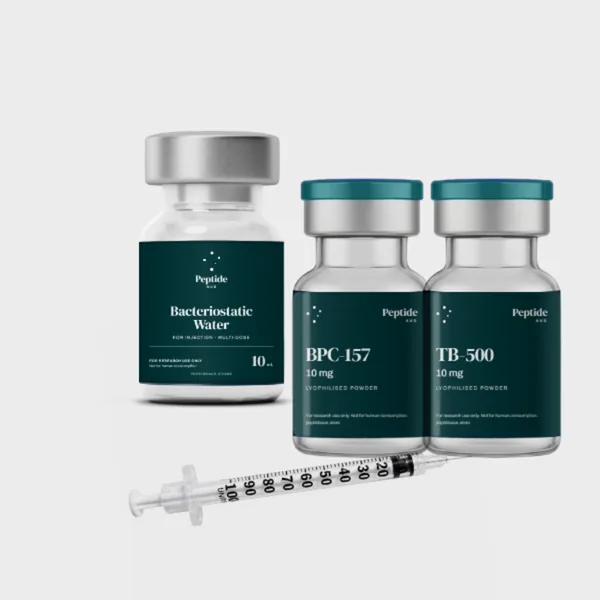
BPC-157 and TB-500 as separate 10mg vials with water, forty syringes and swabs.
$255.99


Research TB-500 vial, dispatched from Australian stock. In Stock
TB-500 is a short synthetic peptide that reproduces the actin-binding region of thymosin beta-4, a 43-amino-acid protein found in nearly every human cell. Thymosin beta-4 governs actin polymerisation, the machinery cells use to move, and it is that property the bulk of the repair research leans on.
The peptide sequesters G-actin and so shifts the balance between free and polymerised actin, which encourages cells to migrate into wound sites. The literature describes downstream effects including endothelial migration and fresh vessel growth, keratinocyte migration during skin-wound closure, and dampened release of inflammatory cytokines.
Thymosin beta-4 has been examined in dermal wound healing (Malinda et al., J Invest Dermatol 1999), corneal injury, and cardiac repair after infarction in mouse models (Bock-Marquette et al., Nature 2004). Clinical trials of the full-length protein in venous ulcers and dry eye have been completed, while the synthetic fragment itself remains at the preclinical stage.
Also known as: Thymosin beta-4 fragment, TB500, Tβ4 (17-23), tb500, tb 500, thymosin beta 4 fragment
Certificate of analysis. Every batch carries a certificate from an independent laboratory. Request the certificate for your batch with your order number and we send it.
These figures describe the research. They are not a recommendation, and Peptide Aus does not give dosing advice for people.
The TB-500 abstracts we cite do not state the amounts they used, so there is no study figure to list here.
| Vial | Bacteriostatic water | Concentration | Per 0.01 mL (1 unit, U-100) |
|---|---|---|---|
| 10mg | 2 mL | 5 mg/mL | 50 mcg |
TB-500 ships as a lyophilised (freeze-dried) powder and is reconstituted with bacteriostatic water before laboratory use. Volumes used on this page: 10mg: 2 mL.
For in-vitro research and laboratory use only. Not for human or veterinary use. By purchasing you confirm you are a qualified researcher and will use this compound in accordance with all applicable laws.
Synthetic fragment of thymosin beta-4 (residues 17-23 region). TB-500 is a short synthetic peptide that reproduces the actin-binding region of thymosin beta-4, a 43-amino-acid protein found in nearly every human cell. Thymosin beta-4 governs actin polymerisation, the machinery cells use to move, and it is that property the bulk of the repair research leans on.
Cell migration: motility assays and actin sequestration. Dermal wound closure: full-thickness wound models. Cardiac repair: remodelling after infarction in rodents. Angiogenesis: endothelial tube formation. Inflammation: cytokine profiles across injury models. Thymosin beta-4 has been examined in dermal wound healing (Malinda et al., J Invest Dermatol 1999), corneal injury, and cardiac repair after infarction in mouse models (Bock-Marquette et al., Nature 2004). Clinical trials of the full-length protein in venous ulcers and dry eye have been completed, while the synthetic fragment itself remains at the preclinical stage.
Dermal wound models reported quicker closure and better collagen organisation; mouse infarction models reported improved cardiac function following thymosin beta-4; corneal injury models reported faster epithelial repair. Human trials of the full-length protein in ulcers reported better healing rates in some arms.
The full-length protein was well tolerated across its clinical trials. For the synthetic fragment there are no human safety data; its actin-based mechanism prompts theoretical questions about cell migration in tumour models that reviews raise but no study has settled. WADA prohibits it.
The published TB-500 abstracts we cite do not state the amounts used, so there is no study figure to report. Peptide Aus supplies TB-500 for in-vitro laboratory research and does not give dosing, cycle or usage guidance for people. The reconstitution section on this page covers how the vial is prepared.
Mechanisms that complement each other; TB-500 powers cell migration and angiogenesis while BPC-157 drives growth-factor and nitric-oxide signalling.
Both derive from thymosin yet differ in function: alpha-1 modulates immunity, whereas the beta-4 fragment is a repair peptide.
The two run through separate systems. BPC-157's described mechanisms work via nitric oxide and growth-factor signalling, while TB-500 acts on the actin cytoskeleton and cell migration. That difference is why they are so often researched side by side, and why we also sell them pre-blended.
Yes. WADA prohibits thymosin beta-4 and its fragments under section S0.
Add about 2 mL of bacteriostatic water slowly down the inside of the vial and swirl gently; do not shake. 10mg in 2 mL gives 5 mg/mL. Refrigerate at 2–8 °C after reconstitution and use within 8–12 weeks. The calculator has this vial preset.
Lyophilised: −20 °C, sealed, away from light and moisture. Reconstituted: 2–8 °C, used within 8–12 weeks, never frozen.
The Therapeutic Goods Administration (TGA) has not registered TB-500 as a medicine in Australia, and it carries no approval for human or veterinary use. Peptide Aus provides it purely as a research reagent for in-vitro laboratory work. In Australia the supply of any substance for human use falls under the Poisons Standard and the Therapeutic Goods Act, and lawful use is the buyer's responsibility. Anyone after a treatment should consult a doctor.
Directly from Peptide Aus, from Australian stock: TB-500 (10mg) is $129.99 AUD including GST. Paid orders before 2pm AEST/AEDT dispatch the same business day, tracked.
BPC-157 and TB-500 as separate 10mg vials with water, forty syringes and swabs.