
Retatrutide in Australia
Retatrutide is available in Australia as a research-grade lyophilised vial for laboratory use, in 5 sizes from $144.99 (10mg) to $549.99 (60mg), and as a ready-to-use research pen in 15mg, 20mg, 30mg, 70mg, shipped from Peptide Aus stock. It is not approved for human use.

Vial sizes and prices
| Product | Price | Per mg | Stock |
|---|---|---|---|
| Retatrutide (10mg) | $144.99 | $14.50/mg | In Stock |
| Retatrutide (15mg) | $179.99 | $12.00/mg | In Stock |
| Retatrutide (20mg) | $229.99 | $11.50/mg | In Stock |
| Retatrutide (30mg) | $329.99 | $11.00/mg | In Stock |
| Retatrutide (60mg) | $549.99 | $9.17/mg | In Stock |
Retatrutide pens
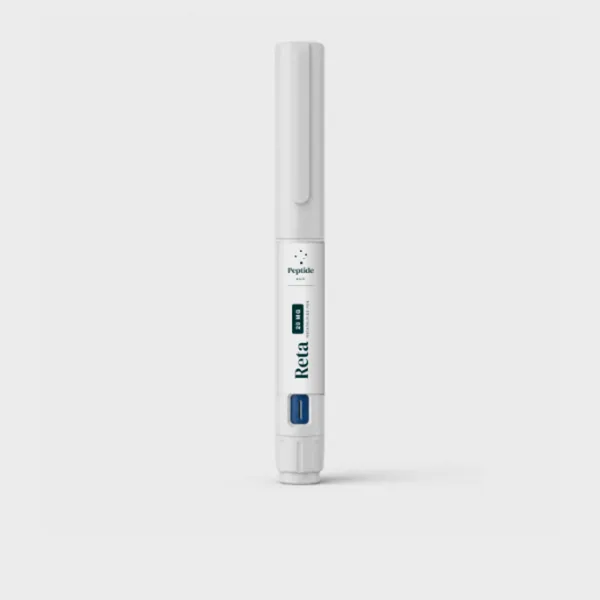
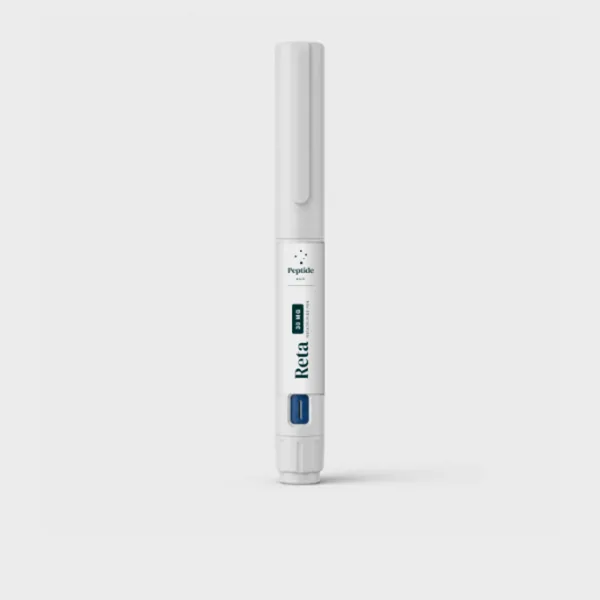
Four strengths of retatrutide in a ready-to-use research pen, with no reconstitution step. The retatrutide pen page compares them.
| Product | Format | Price | Per mg | Stock |
|---|---|---|---|---|
| Retatrutide Pen (15mg) | Premixed AQ pen, 3 mL | $229.99 | — | In Stock |
| Retatrutide Pen (20mg) | Premixed AQ pen, 3 mL | $289.99 | — | In Stock |
| Retatrutide Pen (30mg) | Premixed AQ pen, 3 mL | $399.99 | — | In Stock |
| Retatrutide Pen (70mg) | Dual-chamber cartridge pen | $729.99 | — | In Stock |
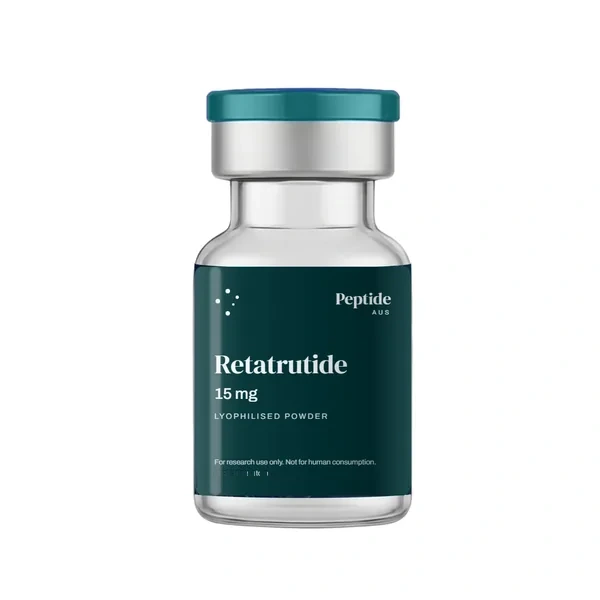


Retatrutide Pen (70mg)
70mg dual-chamber cartridge pen: lyophilised retatrutide and sterile water, mixed at activation
What Retatrutide is
Triple GLP-1, GIP and glucagon receptor agonist
What sets retatrutide apart is that one synthetic peptide switches on three receptors together, GLP-1, GIP and glucagon, rather than the single target of semaglutide or the two of tirzepatide. Eli Lilly is still running Phase 3 trials on it, which means no licensed medicine exists yet and the only material available is a research vial of the kind shown here.
How it works
The published pharmacology gives each of the three receptors a distinct role. Activity at GLP-1 ties in with slower stomach emptying and a smaller appetite, GIP activity with how the body handles insulin and lipids, and glucagon activity with greater energy burn and the breakdown of fat in the liver. The molecule is designed to hold those three actions in balance, and its half-life is long enough to support once-weekly dosing in the study protocols.
What the research reports
In the Phase 2 obesity trial (Jastreboff et al., NEJM 2023), the top-dose group lost on average as much as 24.2% of body weight by week 48, and waist measurement, blood pressure and lipids all improved too. A parallel Phase 2 study in type 2 diabetes recorded falls in HbA1c together with the weight loss. The Phase 3 TRIUMPH program is still running, and retatrutide carries no regulatory approval for any purpose.
Key research areas
- Adiposity — Endpoints covering total and visceral fat mass in the Phase 2 obesity trial
- Energy expenditure — Indirect-calorimetry work in preclinical models examining what the glucagon receptor adds
- Glycaemic control — Fasting glucose and HbA1c measured in the Phase 2 type 2 diabetes group
- Cardiometabolic markers — Triglycerides, blood pressure and liver-fat fraction tracked as secondary endpoints
- Comparative pharmacology — Modelling that pits it directly against semaglutide and tirzepatide
Also known as: Reta, LY3437943, R3ta, Reda peptide, retacore, reta core
Retatrutide dosage: what the published studies used
The table lists the amount, frequency and duration each Retatrutide study reports, in the model it used. Most peptide research is animal or cell work, so the model column matters as much as the number. These figures describe the research. They are not a recommendation, and Peptide Aus does not give dosing advice for people.
| Study | Model | Amount used | How often | Duration |
|---|---|---|---|---|
| Urva S et al. (2022) | Human, phase 1b, type 2 diabetes (n=72) | 0.5, 1.5, 3, 3/6 or 3/6/9/12 mg (top doses by stepwise escalation) | Once weekly, subcutaneous | 12 weeks |
| Rosenstock J et al. (2023) | Human, phase 2, type 2 diabetes (n=281) | 0.5 mg; 4 mg (start 2 mg or no escalation); 8 mg (start 2 or 4 mg); 12 mg (start 2 mg) | Once weekly, injection | 36 weeks (primary endpoint at 24 weeks) |
| Jastreboff AM et al. (2023) | Human, phase 2, obesity (n=338) | 1 mg; 4 mg (start 2 or 4 mg); 8 mg (start 2 or 4 mg); 12 mg (start 2 mg) | Once weekly, subcutaneous | 48 weeks |
| Sanyal AJ et al. (2024) | Human, phase 2a, MASLD substudy (n=98) | 1, 4, 8 or 12 mg | Once weekly, subcutaneous | 48 weeks |
| Coskun T et al. (2025) | Human, phase 2 body-composition substudy (n=189) | 0.5 mg; 4 mg (start 2 or 4 mg); 8 mg (start 2 or 4 mg); 12 mg | Once weekly, subcutaneous | 36 weeks |
| Bajaj HS et al. (2026) | Human, phase 3, type 2 diabetes (n=537) | 4, 9 or 12 mg | Once weekly, subcutaneous | 40 weeks |
Retatrutide vial maths
| Vial | Bacteriostatic water | Concentration | Per 0.01 mL (1 unit, U-100) |
|---|---|---|---|
| 10mg | 1 mL | 10 mg/mL | 100 mcg |
| 15mg | 1.5 mL | 10 mg/mL | 100 mcg |
| 20mg | 2 mL | 10 mg/mL | 100 mcg |
| 30mg | 3 mL | 10 mg/mL | 100 mcg |
| 60mg | 3 mL | 20 mg/mL | 200 mcg |
How to reconstitute Retatrutide
Retatrutide ships as a lyophilised (freeze-dried) powder and is reconstituted with bacteriostatic water before laboratory use. Volumes used on this page: 10mg: 1 mL · 15mg: 1.5 mL · 20mg: 2 mL · 30mg: 3 mL · 60mg: 3 mL.
- Let the vial reach room temperature. Take it out of the freezer about 15 minutes beforehand so condensation doesn't form inside.
- Swab both stoppers. Wipe the Retatrutide vial and the bacteriostatic water vial with an alcohol swab and let them dry.
- Draw the water. Use a fresh syringe to draw the volume for your vial size from the bacteriostatic water vial.
- Add it slowly down the inside wall. Aim the stream at the glass, not at the powder, so the cake dissolves without foaming.
- Swirl, don't shake. Roll the vial gently between your fingers until the solution is clear. Shaking can damage the peptide.
- Label and refrigerate. Write the date and concentration on the vial and store it at 2–8 °C, protected from light. Never freeze reconstituted solution.
- Work out the concentration. The vial maths table above, or the calculator, converts milligrams and millilitres into mg/mL and syringe units.
Is Retatrutide legal in Australia?
No country, Australia included, has granted retatrutide marketing approval; it remains an investigational drug. That means it cannot be prescribed, dispensed or compounded for human use in Australia. Peptide Aus provides research-grade retatrutide strictly for in-vitro laboratory study, and lawful use is the buyer's responsibility.
Frequently asked questions
What is Retatrutide?
Triple GLP-1, GIP and glucagon receptor agonist. What sets retatrutide apart is that one synthetic peptide switches on three receptors together, GLP-1, GIP and glucagon, rather than the single target of semaglutide or the two of tirzepatide. Eli Lilly is still running Phase 3 trials on it, which means no licensed medicine exists yet and the only material available is a research vial of the kind shown here.
What is Retatrutide studied for?
Adiposity: endpoints covering total and visceral fat mass in the Phase 2 obesity trial. Energy expenditure: indirect-calorimetry work in preclinical models examining what the glucagon receptor adds. Glycaemic control: fasting glucose and HbA1c measured in the Phase 2 type 2 diabetes group. Cardiometabolic markers: triglycerides, blood pressure and liver-fat fraction tracked as secondary endpoints. Comparative pharmacology: modelling that pits it directly against semaglutide and tirzepatide. In the Phase 2 obesity trial (Jastreboff et al., NEJM 2023), the top-dose group lost on average as much as 24.2% of body weight by week 48, and waist measurement, blood pressure and lipids all improved too. A parallel Phase 2 study in type 2 diabetes recorded falls in HbA1c together with the weight loss. The Phase 3 TRIUMPH program is still running, and retatrutide carries no regulatory approval for any purpose.
Retatrutide before and after: what do the studies show?
Over 48 weeks the Phase 2 trial recorded average weight reductions of 17.5% at 4mg, 22.8% at 8mg and 24.2% at 12mg weekly, versus 2.1% for placebo, alongside smaller waist circumference and lower blood pressure, triglycerides and liver fat. Those are the trial endpoints that 'retatrutide before and after' actually points to; photographs posted on forums do not count as evidence.
What side effects has Retatrutide research reported?
Across the Phase 2 trials the events seen most often were gastrointestinal, namely nausea, diarrhoea, vomiting and constipation, mostly mild to moderate and tied to dose, with a faster heart rate and skin sensations appearing at the higher doses. More people in the top-dose groups stopped because of adverse events. Establishing long-term safety is the job of Phase 3.
What is the Retatrutide dosage?
In the published Retatrutide research, the amounts used were 0.5, 1.5, 3, 3/6 or 3/6/9/12 mg (top doses by stepwise escalation), Once weekly, subcutaneous in human, phase 1b, type 2 diabetes (Urva S et al. (2022)); 0.5 mg; 4 mg (start 2 mg or no escalation); 8 mg (start 2 or 4 mg); 12 mg (start 2 mg), Once weekly, injection in human, phase 2, type 2 diabetes (Rosenstock J et al. (2023)); 1 mg; 4 mg (start 2 or 4 mg); 8 mg (start 2 or 4 mg); 12 mg (start 2 mg), Once weekly, subcutaneous in human, phase 2, obesity (Jastreboff AM et al. (2023)). These are the figures each study reports for its own model, listed in full in the dosage table on this page with links to PubMed. Peptide Aus supplies Retatrutide for in-vitro research and does not give dosing guidance for people.
Retatrutide vs tirzepatide: what is the difference?
Where tirzepatide works on GLP-1 and GIP, retatrutide also recruits the glucagon receptor. Judged by their separate trials, retatrutide's highest dose shed more weight on average (24.2% at 48 weeks) than tirzepatide's (22.5% at 72 weeks), though the two have never been compared in one trial.
Retatrutide vs semaglutide: what is the difference?
Semaglutide is a single GLP-1 receptor agonist that comes in a registered pen, whereas retatrutide is a triple agonist still under investigation. Its Phase 2 weight loss came in above the 14.9% semaglutide reached in STEP-1.
Retatrutide vs cagrilintide: what is the difference?
Rather than the incretin receptors, cagrilintide acts through amylin. It is tested both alone and paired with semaglutide as CagriSema, while retatrutide packs three receptor actions into a single molecule.
Can you buy retatrutide in Australia yet?
Not as a licensed medicine. It remains an investigational compound in Phase 3 testing that the TGA has neither received a submission for nor registered, so no pharmacy stocks it, no prescription route exists and nothing can be compounded. The only form on offer is research-grade material, and Peptide Aus carries it in two formats for laboratory work alone: lyophilised vials spanning 10mg to 60mg and retatrutide pens in 15mg, 20mg, 30mg and 70mg.
Will Chemist Warehouse or a compounding pharmacy sell me retatrutide?
No. High-street pharmacies only carry registered medicines, and retatrutide is not registered in any country. A compounding pharmacy also has no lawful route to prepare an unapproved investigational drug for supply. The retatrutide pens listed here ship from Australian stock as research devices through Peptide Aus, and are not pharmacy products.
Should I pick the retatrutide pen or the vial?
Choose the vial, which is lyophilised powder you reconstitute yourself, when the laboratory work calls for a particular concentration. The pen arrives ready to use: retatrutide already dissolved in 3 mL of aqueous solution inside a dial-a-dose device with 0.5 mg clicks, offered in 15mg, 20mg, 30mg and 70mg or made to a custom strength on request, with no mixing needed. Each is a research format, and a batch certificate can be sent on request.
What makes retatrutide different from tirzepatide and semaglutide?
The receptor count is the difference: semaglutide hits GLP-1 only, tirzepatide hits GLP-1 and GIP, and retatrutide brings glucagon receptor activity on top. Across the published Phase 2 results that triple profile drove bigger weight reductions than either earlier compound managed in its own studies, although no head-to-head trial has yet put them side by side.
How do you reconstitute Retatrutide?
With bacteriostatic water added slowly down the inside wall of the vial, then swirled gently. Each vial size lists its suggested volume, and the calculator converts volume to concentration.
How should Retatrutide be stored?
Lyophilised: −20 °C, sealed, away from light and moisture. Reconstituted: 2–8 °C, used within 8–12 weeks, never frozen.
Is Retatrutide legal in Australia?
No country, Australia included, has granted retatrutide marketing approval; it remains an investigational drug. That means it cannot be prescribed, dispensed or compounded for human use in Australia. Peptide Aus provides research-grade retatrutide strictly for in-vitro laboratory study, and lawful use is the buyer's responsibility.
Where can I buy Retatrutide in Australia, and what does it cost?
Directly from Peptide Aus, from Australian stock, in 5 vial sizes from $144.99 (10mg) to $549.99 (60mg). Prices are AUD and GST inclusive. Paid orders before 2pm AEST/AEDT dispatch the same business day, tracked.
How much bacteriostatic water do you add to Retatrutide?
It depends on the vial size: 10mg takes 1 mL, 15mg takes 1.5 mL, 20mg takes 2 mL, 30mg takes 3 mL, 60mg takes 3 mL. That gives 10 mg/mL, 10 mg/mL, 10 mg/mL, 10 mg/mL, 20 mg/mL respectively. The reconstitution steps on this page and the calculator cover the rest.
Kits with this compound
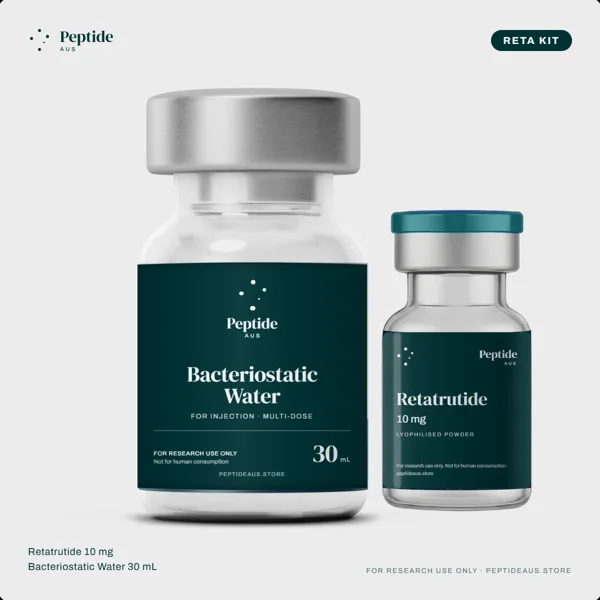
Retatrutide Starter Kit (10mg vial)
Everything for a first retatrutide vial: 10mg vial, 30 mL bacteriostatic water, syringes and swabs.
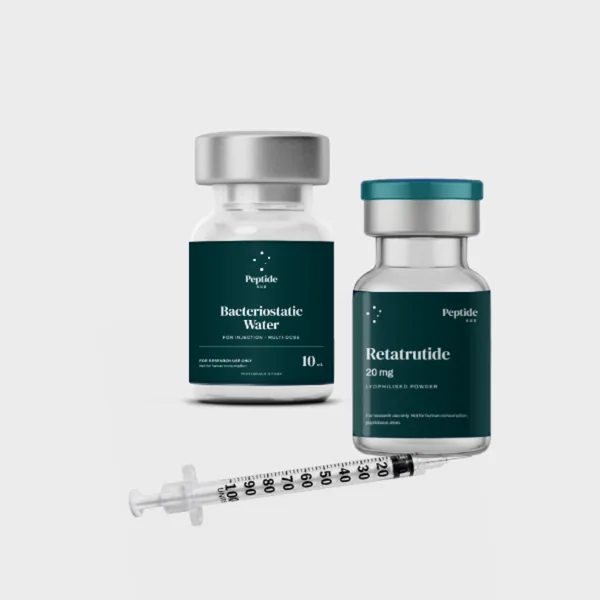
Retatrutide Starter Kit (20mg vial)
The 20mg retatrutide vial with bacteriostatic water, twenty syringes and swabs.
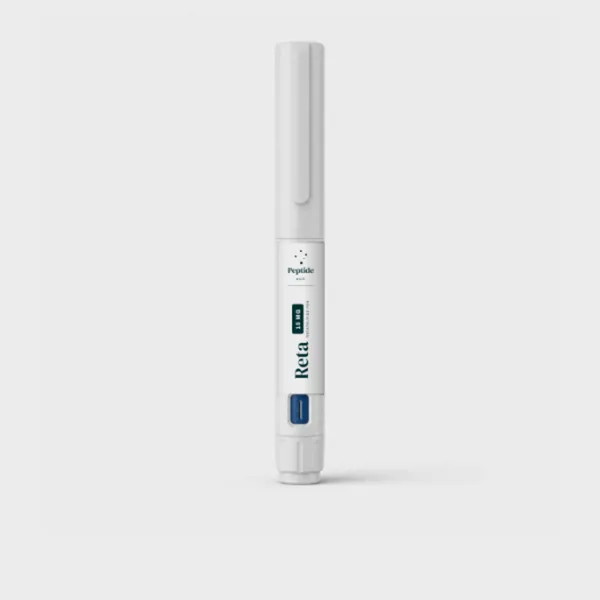
Retatrutide Pen Kit (15mg)
15mg premixed retatrutide pen with twenty pen needles and swabs. Nothing to mix.

Retatrutide Pen Kit (70mg)
70mg dual-chamber retatrutide pen with twenty pen needles and swabs. Water is built into the pen.

Retatrutide Value Pack (3 x 20mg)
Three 20mg retatrutide vials (60mg) with bacteriostatic water, sixty syringes and swabs.

Retatrutide Value Pack (2 x 30mg)
Two 30mg retatrutide vials (60mg) with bacteriostatic water, forty syringes and swabs.
All Retatrutide products are supplied for in-vitro research and laboratory use only. Not for human or veterinary use.