

Tissue Repair Research
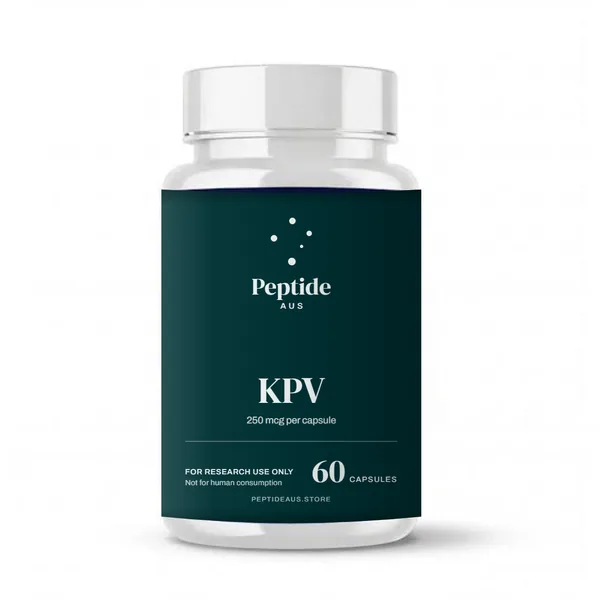
KPV Capsules (60 × 250mcg)
Oral-format KPV for research, dispatched from Australian stock. In Stock
$84.99AUD, GST inclusive
250 mcg per capsule60 capsules (15mg total)CoA on requestSame business day dispatch*
C-terminal tripeptide of alpha-MSH (Lys-Pro-Val)
KPV consists of the final three amino acids of alpha-melanocyte-stimulating hormone. It retains the parent hormone's anti-inflammatory action while shedding the pigmentation effect, which makes it a clean probe for studying melanocortin-driven control of inflammation, the gut especially.
Each capsule contains 250 mcg of KPV, 60 capsules per bottle (15mg in total). Oral KPV has direct support in the colitis literature, where the peptide enters intestinal cells through the PepT1 transporter, so the capsule format suits gut-inflammation and oral research designs. The 10mg lyophilised vial remains the format for solution work.
How it works
KPV blocks NF-κB activation in epithelial and immune cells and lowers output of IL-6, TNF-α and IL-1β. Within intestinal epithelium it seems to enter cells via the PepT1 transporter, which is upregulated where colon tissue is inflamed.
What the research reports
Reduced inflammation scores with both oral and systemic KPV were reported in mouse colitis studies (Dalmasso et al., Gastroenterology 2008). Skin models have looked at wound inflammation and at antimicrobial activity against Staphylococcus aureus and Candida.
Key research areas
- Intestinal inflammation — DSS and TNBS colitis models
- NF-κB signalling — Suppression of cytokines in epithelial cells
- Skin inflammation — Wound and dermatitis models
- Antimicrobial activity — Fungal and bacterial assays
Also known as: Lys-Pro-Val, alpha-MSH 11-13, kpv 10mg
Certificate of analysis. Every batch carries a certificate from an independent laboratory. Request the certificate for your batch with your order number and we send it.
Specifications
- Compound
- KPV
- CAS number
- 67727-97-3
- Category
- Tissue Repair Research
- Format
- Capsules
- Per capsule
- 250 mcg
- Capsules per bottle
- 60
- Total KPV
- 15mg
- Certificate of analysis
- Available on request
- Storage
- Below 25 °C, sealed, away from moisture and light
- SKU
- CAP-KPV-60
For in-vitro research and laboratory use only. Not for human or veterinary use. By purchasing you confirm you are a qualified researcher and will use this compound in accordance with all applicable laws.
Frequently asked questions
What is KPV?
C-terminal tripeptide of alpha-MSH (Lys-Pro-Val). KPV consists of the final three amino acids of alpha-melanocyte-stimulating hormone. It retains the parent hormone's anti-inflammatory action while shedding the pigmentation effect, which makes it a clean probe for studying melanocortin-driven control of inflammation, the gut especially.
What is KPV studied for?
Intestinal inflammation: dSS and TNBS colitis models. NF-κB signalling: suppression of cytokines in epithelial cells. Skin inflammation: wound and dermatitis models. Antimicrobial activity: fungal and bacterial assays. Reduced inflammation scores with both oral and systemic KPV were reported in mouse colitis studies (Dalmasso et al., Gastroenterology 2008). Skin models have looked at wound inflammation and at antimicrobial activity against Staphylococcus aureus and Candida.
KPV before and after: what do the studies show?
Mouse colitis studies reported lower inflammation scores and cytokine levels with KPV, the oral route included; skin models reported less inflammatory infiltrate along with antimicrobial activity in culture.
What side effects has KPV research reported?
No human trials have appeared in print. Rodent work reported no toxicity at the doses used, and KPV lacks the pigmentation effect of alpha-MSH, which was the point of its design.
What is the KPV dosage?
In the published KPV research, the amounts used were Nanomolar concentrations in cell culture, human intestinal epithelial cells and t cells (Dalmasso G et al. (2008)); 10⁻¹⁵ to 10⁻⁷ M in cell culture, human keratinocytes (Elliott RJ et al. (2004)). These are the figures each study reports for its own model, listed in full in the dosage table on this page with links to PubMed. Peptide Aus supplies KPV for in-vitro research and does not give dosing guidance for people.
Is there KPV in capsule or oral form?
The colitis literature directly supports oral KPV, where it enters intestinal cells through the PepT1 transporter. For now Peptide Aus stocks the 10mg lyophilised vial, with a capsule format being considered.
KPV vs BPC-157: what is the difference?
BPC-157 is studied for gut protection via repair signalling, whereas KPV targets gut inflammation by suppressing NF-κB. KLOW brings the two together.
KPV vs alpha-MSH: what is the difference?
KPV is the final three residues of alpha-MSH, holding on to the anti-inflammatory action while dropping the melanocortin receptor effects.
Does oral KPV work?
Oral KPV reduced inflammation scores in mouse colitis studies, entering intestinal cells through the PepT1 transporter that is upregulated in inflamed colon. That is the evidence base for the capsule format.
How should the capsules be stored?
Sealed, below 25 °C, away from moisture and light.
Are KPV capsules legal in Australia?
The Therapeutic Goods Administration (TGA) has not registered KPV as a medicine in Australia, and it is not approved for human or veterinary use. Peptide Aus supplies it only as a research reagent for in-vitro laboratory work. In Australia the supply of any substance for human use falls under the Poisons Standard and the Therapeutic Goods Act, and the buyer carries responsibility for lawful use. Anyone seeking a treatment should talk to a doctor.
Where can I buy KPV capsules in Australia?
Directly from Peptide Aus, from Australian stock. Paid orders before 2pm AEST/AEDT dispatch the same business day, tracked.
Frequently bought together


